
Educational and Medical Disclaimer
Modalert vs Adderall is an educational comparison of prescription medicines with different clinical uses, safety considerations and regulatory requirements. This article does not provide personal medical advice or recommend starting, stopping, switching or combining medicines. These treatments are not automatically interchangeable, even when they influence similar aspects of alertness or attention. Prescription medicine selection requires assessment by an appropriately qualified healthcare professional.
Modalert vs Adderall is a comparison that frequently appears in discussions about wakefulness, concentration and prescription stimulants. Adding Vyvanse introduces a third medicine with a different formulation and clinical background.
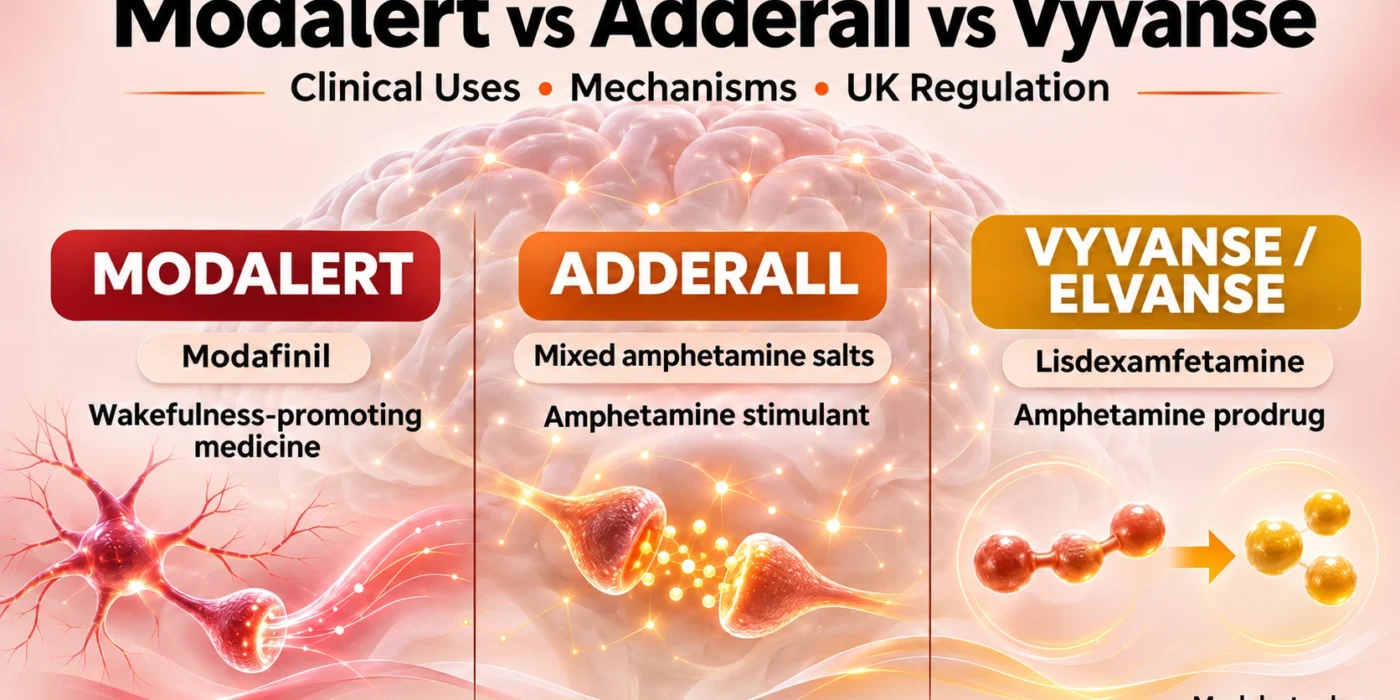
Modalert contains modafinil, a wakefulness-promoting medicine associated with narcolepsy treatment. Adderall contains mixed amphetamine salts, while Vyvanse contains lisdexamfetamine, which the UK markets under the brand name Elvanse.
Although these medicines influence central nervous system activity, they have different mechanisms, clinical indications and regulatory classifications.
Consequently, a meaningful comparison requires more than examining perceived alertness, concentration or duration of effect.
For UK readers, it is particularly important to distinguish research findings from authorised medical uses and to recognise that international brand names do not necessarily correspond to UK marketing authorisations.
While these medicines differ in their pharmacology and approved uses, readers seeking more background on modafinil can consult our Modalert uses, safety and UK regulations guide.
Modalert vs Adderall vs Vyvanse: Three Different Clinical Roles
The most useful starting point is not which medicine appears stronger. Instead, it is the condition each medicine has been studied and authorised to treat.
Wakefulness-promoting medicines and amphetamine stimulants influence some overlapping brain pathways. However, their clinical purposes differ.
Understanding Modalert and Modafinil
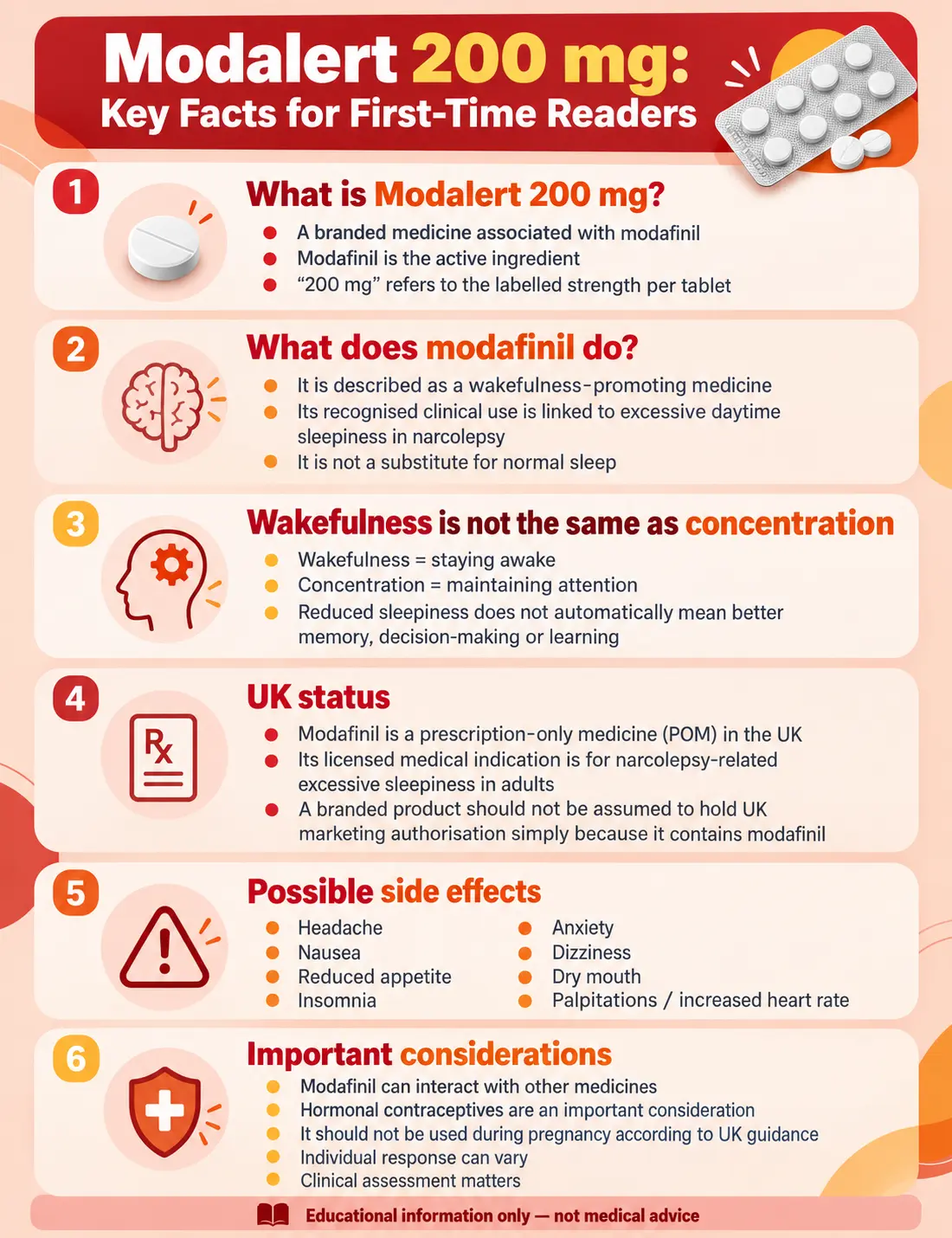
Modalert is a brand containing modafinil, a medicine that promotes wakefulness in people experiencing certain forms of excessive daytime sleepiness.
In the UK, authorised modafinil products have a recognised indication for excessive sleepiness in adults with narcolepsy, with or without cataplexy.
Following a European safety review, the Medicines and Healthcare products Regulatory Agency (MHRA) restricted the authorised therapeutic indication to narcolepsy-related sleepiness.
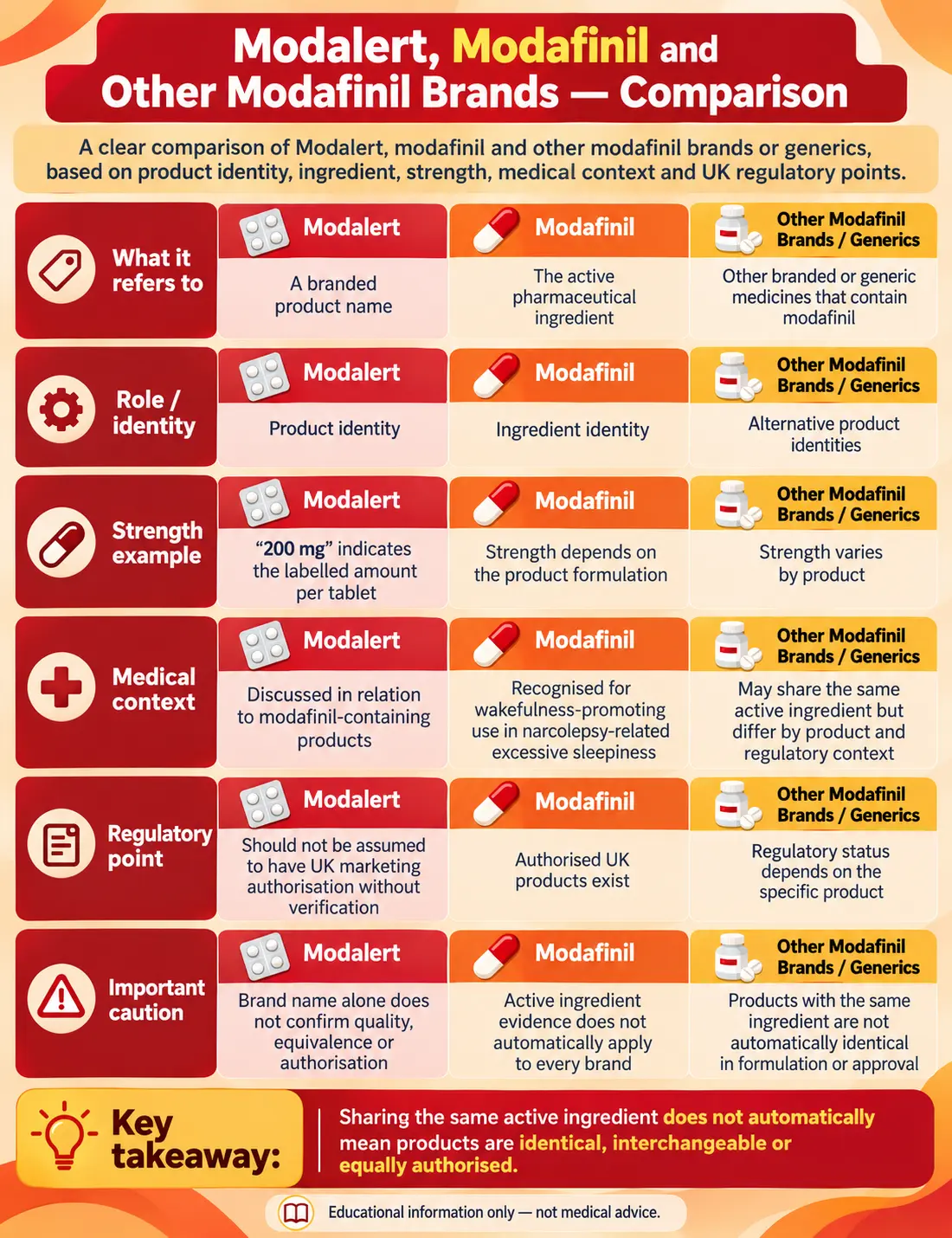
Importantly, authorisation of modafinil as an active ingredient does not mean every international brand containing it has UK marketing authorisation.
Modalert itself should therefore be distinguished from individually authorised UK modafinil products.
Readers unfamiliar with the medicine can find broader background in the related Modalert 200 mg first-time guide.
Understanding Adderall and Mixed Amphetamine Salts
Adderall contains a combination of amphetamine salts that provide dextroamphetamine and levoamphetamine.
These substances act as central nervous system stimulants and influence neurotransmitter signalling associated with attention and arousal.
In the United States, the immediate-release Adderall product has authorised indications for attention deficit hyperactivity disorder (ADHD) and narcolepsy.
However, Adderall is not a standard UK-authorised branded ADHD medicine.
Its international prescribing information provides useful scientific context, but overseas regulatory approval does not establish equivalent UK marketing authorisation.
Vyvanse and Elvanse: Understanding Lisdexamfetamine
Vyvanse contains lisdexamfetamine dimesylate, a medicine that the body converts into dexamfetamine.
Lisdexamfetamine belongs to a class of substances called prodrugs. A prodrug undergoes conversion within the body to produce its active substance.
Vyvanse is the American brand name, while Elvanse is a UK brand containing lisdexamfetamine.
UK Elvanse prescribing information covers ADHD in specified patient populations, including adults with symptoms originating in childhood.
Although both brands contain lisdexamfetamine, their national authorisations must be considered separately.
For example, the American Vyvanse label includes an indication for moderate-to-severe binge eating disorder in adults. That indication should not be assumed to apply to UK Elvanse
Modalert vs Adderall: How Do Their Brain Mechanisms Differ?
The distinction between modafinil and amphetamine medicines begins with how they influence neurotransmitter activity.
Neurotransmitters are chemical messengers that help nerve cells communicate. Dopamine and noradrenaline contribute to several functions involving arousal, attention and behavioural regulation.
However, medicines that influence these chemicals do not necessarily produce identical clinical outcomes.
Modafinil and Wakefulness-Related Pathways
Modafinil interacts with dopamine transporters, proteins that help remove dopamine from the space between nerve cells after its release.
By inhibiting dopamine reuptake, modafinil can increase extracellular dopamine availability.
A 2009 brain-imaging study by Volkow and colleagues, published in JAMA, examined modafinil’s effects in ten healthy male participants.
Researchers found reduced dopamine transporter availability and evidence of increased extracellular dopamine after modafinil exposure.
Nevertheless, this small experimental study examined brain chemistry rather than clinical treatment effectiveness. Its findings do not establish improved attention, academic performance or workplace productivity.
PubMed+1
Furthermore, modafinil’s wakefulness-promoting activity involves more than dopamine alone. Research also implicates signalling systems that regulate arousal and the sleep–wake cycle.
Scientists have not fully established its complete therapeutic mechanism.
How Adderall Affects Neurotransmitter Signalling
Amphetamine medicines influence dopamine and noradrenaline through several processes.
They can increase the release of these neurotransmitters and affect their reuptake, changing the availability of chemical signals between nerve cells.
Dopamine contributes to motivation, reward processing and aspects of attention. Meanwhile, noradrenaline helps regulate alertness, vigilance and responses to relevant information.
These mechanisms help explain the established clinical role of amphetamine-based medicines in ADHD treatment.
However, biochemical activity alone cannot predict how an individual will respond to a particular medicine.
Why Vyvanse Is a Prodrug
Lisdexamfetamine consists of dexamfetamine chemically linked to the amino acid L-lysine.
Following absorption, processes occurring primarily in the blood convert lisdexamfetamine into active dexamfetamine.
This conversion contributes to its distinctive pharmacokinetic profile, meaning the way the body processes the medicine over time.
As a result, lisdexamfetamine differs from immediate-release dexamfetamine preparations and mixed amphetamine salts.
Nevertheless, its prodrug structure does not eliminate misuse or dependence risks. Nor does it establish that lisdexamfetamine produces better clinical results than every other ADHD medicine.
Modalert vs Adderall for ADHD and Narcolepsy: Why Diagnosis Matters
ADHD and narcolepsy can both affect daytime functioning. However, their underlying clinical features differ substantially.
ADHD and Its Core Symptoms
ADHD is a neurodevelopmental condition characterised by persistent patterns of inattention, hyperactivity and/or impulsivity that interfere with everyday functioning.
Symptoms may involve difficulties organising activities, maintaining attention, managing impulses or completing tasks.
In contrast, excessive sleepiness is not the defining feature of ADHD.
The UK’s NICE guideline NG87 identifies lisdexamfetamine or methylphenidate as first-line pharmacological options for adults with ADHD when medication is appropriate.
Modafinil is not among the routine NICE-recommended medicines for ADHD.
Although researchers have investigated modafinil for ADHD, such research does not establish a UK-licensed indication.
Narcolepsy and Excessive Daytime Sleepiness
Narcolepsy is a neurological sleep–wake disorder involving excessive daytime sleepiness.
Some people also experience cataplexy, sleep paralysis or disrupted nighttime sleep.
A person experiencing narcolepsy may have difficulty concentrating because of an overwhelming tendency to fall asleep.
By comparison, someone with ADHD may experience persistent difficulties with attention and executive functioning while remaining fully awake.
Therefore, improving wakefulness does not necessarily address the underlying symptoms of ADHD.
This distinction is central to interpreting clinical evidence about modafinil and amphetamine medicines.
Modalert vs Adderall: What Does Clinical Research Show?
Clinical research does not establish a universal ranking of modafinil, mixed amphetamine salts and lisdexamfetamine.
Studies examine different populations, clinical conditions, formulations and outcomes.
Consequently, evidence from one medical condition cannot automatically establish effectiveness in another.
Modafinil Research in NarcolepsyDuration
Randomised, placebo-controlled trials have investigated modafinil in adults with narcolepsy.
A multicentre study published in Neurology in 2000 included 271 participants who received study medication during a nine-week treatment phase.
Researchers examined daytime sleepiness through established clinical measures.
The findings supported modafinil’s effectiveness in improving wakefulness among the studied patients with narcolepsy.
However, these results concern a diagnosed sleep disorder and do not demonstrate general cognitive enhancement in healthy individuals.
Adderall Research in ADHD
Mixed amphetamine salts have an established evidence base within American ADHD treatment.
Clinical research and regulatory assessments have examined ADHD symptoms, functional outcomes and medicine-specific safety considerations.
Nevertheless, findings concerning Adderall cannot automatically apply to every amphetamine-related medicine.
Differences in active substance composition, formulation and clinical study design matter when interpreting the evidence.
Lisdexamfetamine and ADHD Evidence
Researchers have examined lisdexamfetamine in controlled ADHD studies using recognised symptom scales and clinical assessments.
NICE considered this evidence when developing recommendations for adult ADHD medication.
Additionally, UK Elvanse prescribing information describes its authorised indications, clinical findings and safety requirements.
The evidence supports lisdexamfetamine’s defined role in ADHD treatment. However, it does not establish universal superiority over other medicines.
Research Involving Healthy Adults
Research has also investigated modafinil’s effects on cognitive performance in people who are not sleep-deprived.
A 2019 systematic review and meta-analysis by Kredlow and colleagues examined 19 placebo-controlled trials involving single-dose modafinil.
The review assessed attention, executive functioning, memory and processing speed in non-sleep-deprived adults.
Across the assessed cognitive domains, the researchers identified a small overall positive effect (Hedges’ g = 0.10).
Importantly, the review included both psychiatric and non-psychiatric populations. It should not therefore be described as evidence drawn exclusively from healthy volunteers.
The authors concluded that modafinil showed only limited potential as a cognitive enhancer outside sleep-deprived populations.
PubMed+1
These findings do not establish meaningful improvements in real-world academic achievement, occupational performance or complex decision-making.
Limits of Direct Comparative Evidence
A definitive head-to-head clinical trial establishing the superiority of all three branded medicines across one shared clinical population has not been identified for this comparison.
Furthermore, separate trials involving ADHD, narcolepsy and non-sleep-deprived participants measure different outcomes.
Therefore, comparing results from unrelated studies cannot establish which medicine is universally more effective.
Modalert vs Adderall: Wakefulness Versus Concentration
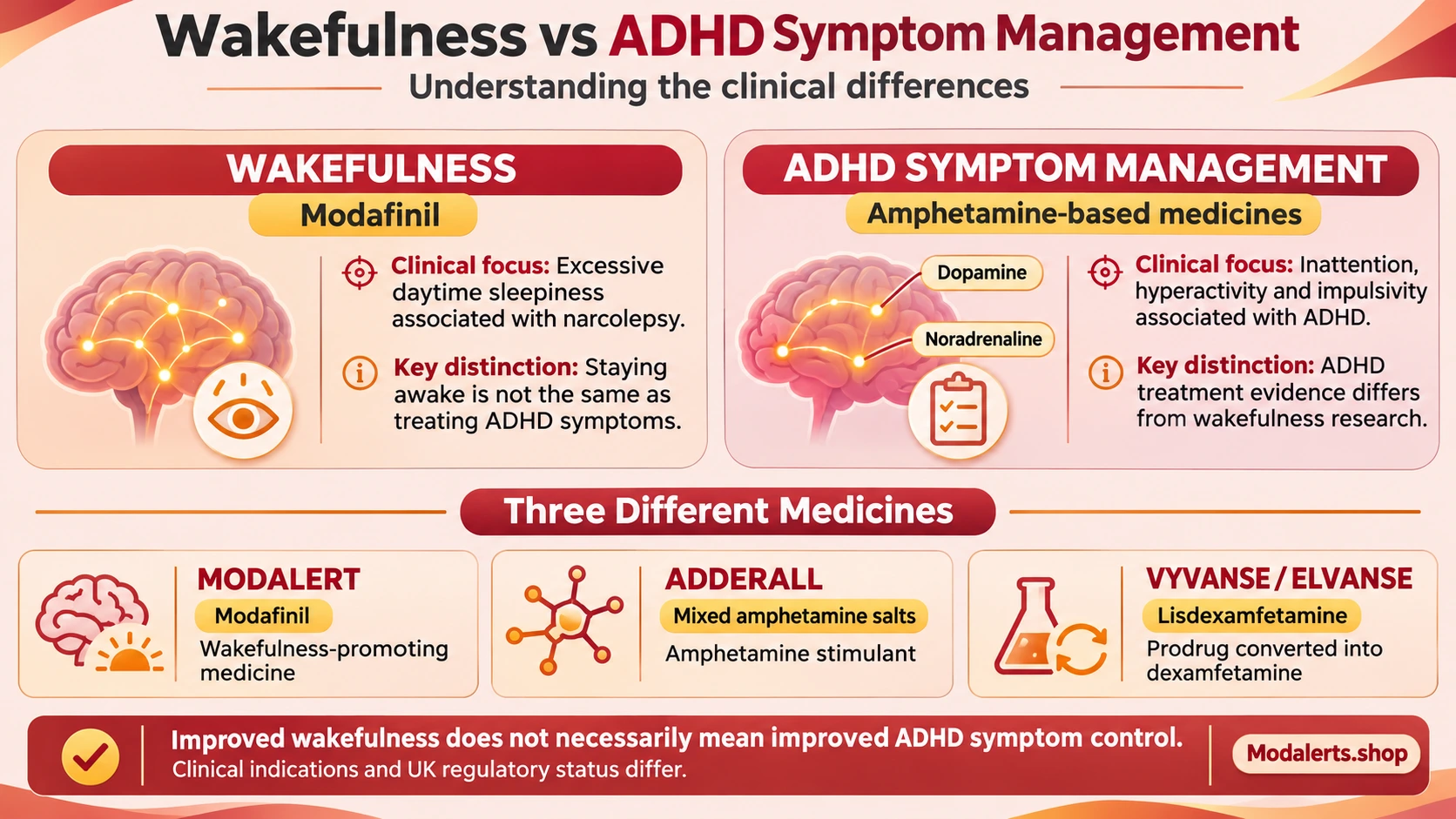
Wakefulness, attention and executive functioning are related but distinct areas of brain function.
Understanding the differences helps prevent misleading interpretations of medicine research.
- Wakefulness: The ability to remain awake rather than unintentionally falling asleep.
- Sustained attention: The ability to maintain focus on relevant information over time.
- ADHD symptom reduction: Clinically meaningful changes in inattention, hyperactivity or impulsivity.
- Executive functioning: Cognitive processes involving planning, working memory, task organisation and behavioural regulation.
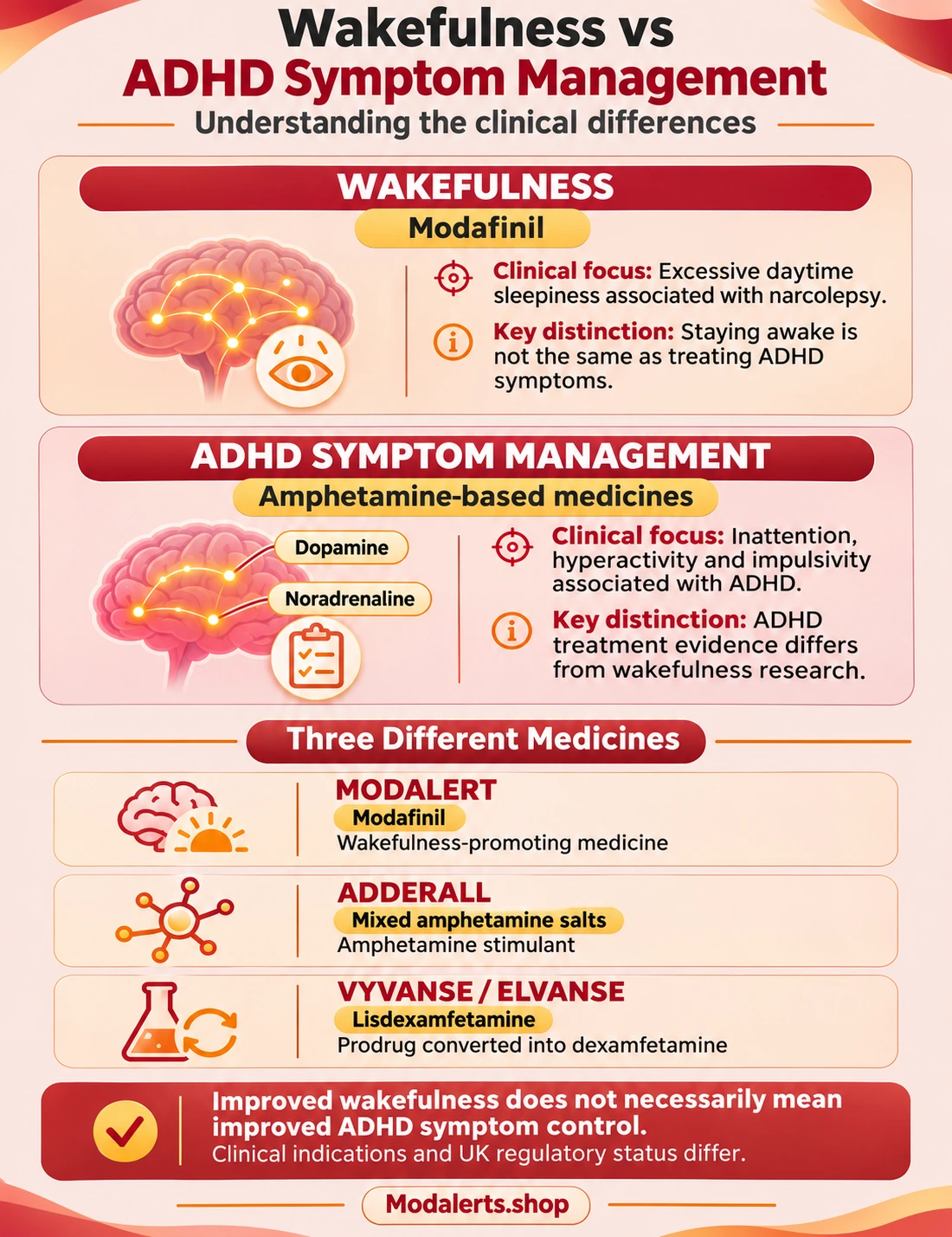
Researchers use different tools to measure these outcomes.
For example, the Maintenance of Wakefulness Test measures the ability to remain awake under controlled conditions. The Epworth Sleepiness Scale assesses subjective daytime sleepiness.
ADHD studies frequently examine clinician-rated symptoms and functional impairment.
Meanwhile, cognitive research may focus on reaction time, memory tasks or accuracy.
However, improvement on one assessment does not guarantee improvement on another.
Remaining awake during a clinical test does not necessarily demonstrate better judgement, planning or complex problem-solving.
Similarly, a change in reaction time does not establish better everyday functioning.
This distinction is particularly important when interpreting claims about prescription medicines in demanding educational or professional settings.
Why Onset and Duration Cannot Be Compared by One Number
Discussions about prescription stimulants often focus on how quickly a medicine begins acting or how long its effects last.
However, these questions involve different pharmacological measurements.
Absorption describes how a substance enters the bloodstream.
Formulation concerns how a medicine is prepared and how its active ingredient becomes available. Immediate-release and extended-release preparations may have different concentration profiles.
Prodrug conversion describes the process through which a substance such as lisdexamfetamine becomes pharmacologically active.
Elimination half-life describes the time required for a substance’s concentration in the body to decrease by approximately half.
Clinical effect duration concerns how long a measurable therapeutic response persists.
These measurements are not interchangeable.
For example, a substance may remain detectable after its noticeable therapeutic effects have declined.
Furthermore, differences between immediate-release amphetamine preparations, extended-release products and lisdexamfetamine complicate direct comparisons.
Individual metabolism, clinical characteristics and research methods may also influence findings.
Consequently, a single duration figure cannot establish which medicine is clinically preferable or more effective.
Modalert vs Adderall: Dependence, Misuse and Safety Differences
The safety profiles of modafinil and amphetamine medicines share some features but also differ in important ways.
A responsible comparison considers ingredient-specific warnings rather than assuming all medicines that influence alertness carry identical risks.
Dependence and Misuse Potential
Dependence, tolerance, misuse and controlled-drug classification describe different concepts.
Dependence involves adaptation to repeated substance exposure. Tolerance refers to a reduced response over time, while misuse involves use outside intended or prescribed conditions.
Controlled-drug classification is a legal framework governing particular substances.
Adderall and lisdexamfetamine carry important warnings concerning misuse, addiction and dependence.
Modafinil has a different regulatory and pharmacological profile. Nevertheless, research has identified potential misuse-related concerns.
The 2009 JAMA dopamine study also highlighted the relevance of dopamine signalling when considering possible abuse liability in vulnerable populations.
Therefore, the absence of a substance from a particular UK controlled-drug schedule does not establish that misuse or dependence is impossible.
Cardiovascular and Mental Health Considerations
Headache, insomnia and changes in appetite appear among the recognised adverse effects associated with these medicine groups.
Amphetamine formulations commonly list appetite reduction, weight changes and sleep disturbance.
Modafinil is also associated with headache, insomnia and other adverse reactions, alongside its ingredient-specific serious warnings.
However, the presence of similar adverse-effect terms does not mean their frequency, severity or clinical implications are identical.
The related Modalert side-effects guide provides additional background on modafinil safety without treating those findings as applicable to every stimulant medicine.
Modalert vs Adderall: UK and US Regulatory Differences
Regulatory status is an essential consideration when comparing internationally marketed prescription medicines.
In the UK, modafinil is a prescription-only medicine. Authorised modafinil products have an indication for excessive sleepiness associated with narcolepsy.
However, approval of modafinil as an active ingredient does not establish that every international product containing it holds UK marketing authorisation.
The related Modalert UK legality guide examines this distinction in greater detail.
Adderall has American marketing authorisation for specified indications, but this does not confer equivalent authorisation in the UK.
Lisdexamfetamine, by contrast, has UK-authorised products under the Elvanse name, subject to their specific approved indications.
UK legislation also places controls on amphetamine-related substances.
Under the Misuse of Drugs Regulations 2001, lisdexamfetamine and amphetamine substances fall within Schedule 2 controlled-drug provisions.
Three regulatory concepts should remain separate:
- Marketing authorisation: Permission to market a particular medicinal product for defined purposes.
- Controlled-drug scheduling: Legal requirements governing specified substances, including their possession and supply.
- Clinical prescribing guidance: Evidence-based recommendations that inform professional treatment decisions.
Furthermore, prescription-only status and controlled-drug scheduling are not the same legal classification.
UK and European regulatory assessments also consider the balance between therapeutic benefits and risks for particular conditions.
These distinctions help explain why evidence concerning an internationally recognised brand cannot automatically establish its UK regulatory position.
What Should UK Readers Consider When Comparing These Medicines?
A reliable comparison begins with the medicine’s active ingredient rather than its brand name.
Next, the authorised indication provides essential context. Clinical trials supporting one condition may not establish benefits for a different condition.
Research quality also matters. Randomised controlled trials, systematic reviews and official prescribing information generally offer stronger evidence than individual experiences.
Additionally, formulation differences can affect how the body processes a medicine, even when two products contain related substances.
Safety considerations require the same product-specific approach.
Finally, UK regulatory status determines the legal framework within which a prescription medicine may be marketed and supplied.
Together, these factors provide a more dependable way to interpret claims about wakefulness, attention and prescription stimulants.
Modalert vs Adderall vs Vyvanse: Comparison at a Glance
|
Comparison Factor |
Modalert |
Adderall |
Vyvanse / Elvanse |
|
Active ingredient |
Modafinil |
Mixed amphetamine salts |
Lisdexamfetamine |
|
Pharmacological approach |
Wakefulness-promoting medicine |
Amphetamine stimulant |
Amphetamine prodrug |
|
Main clinical context |
Narcolepsy-related sleepiness |
ADHD and narcolepsy (US authorisation) |
ADHD (UK and US); binge eating disorder (US only) |
|
ADHD evidence |
Investigated off-label; not routinely NICE-recommended |
Established ADHD evidence in US prescribing context |
Established ADHD evidence |
|
Formulation |
Modafinil tablets |
Immediate-release tablets; separate extended-release product |
Prodrug capsules; formulation availability varies by market |
|
Dependence and misuse |
Recognised misuse-related concerns |
Important misuse and dependence risks |
Important misuse and dependence risks |
|
UK regulatory status |
UK authorisation of the Modalert brand not established |
Not a standard UK-authorised brand |
Elvanse is UK-authorised |
|
Interchangeability |
Not automatically interchangeable |
Not automatically interchangeable |
Not automatically interchangeable |

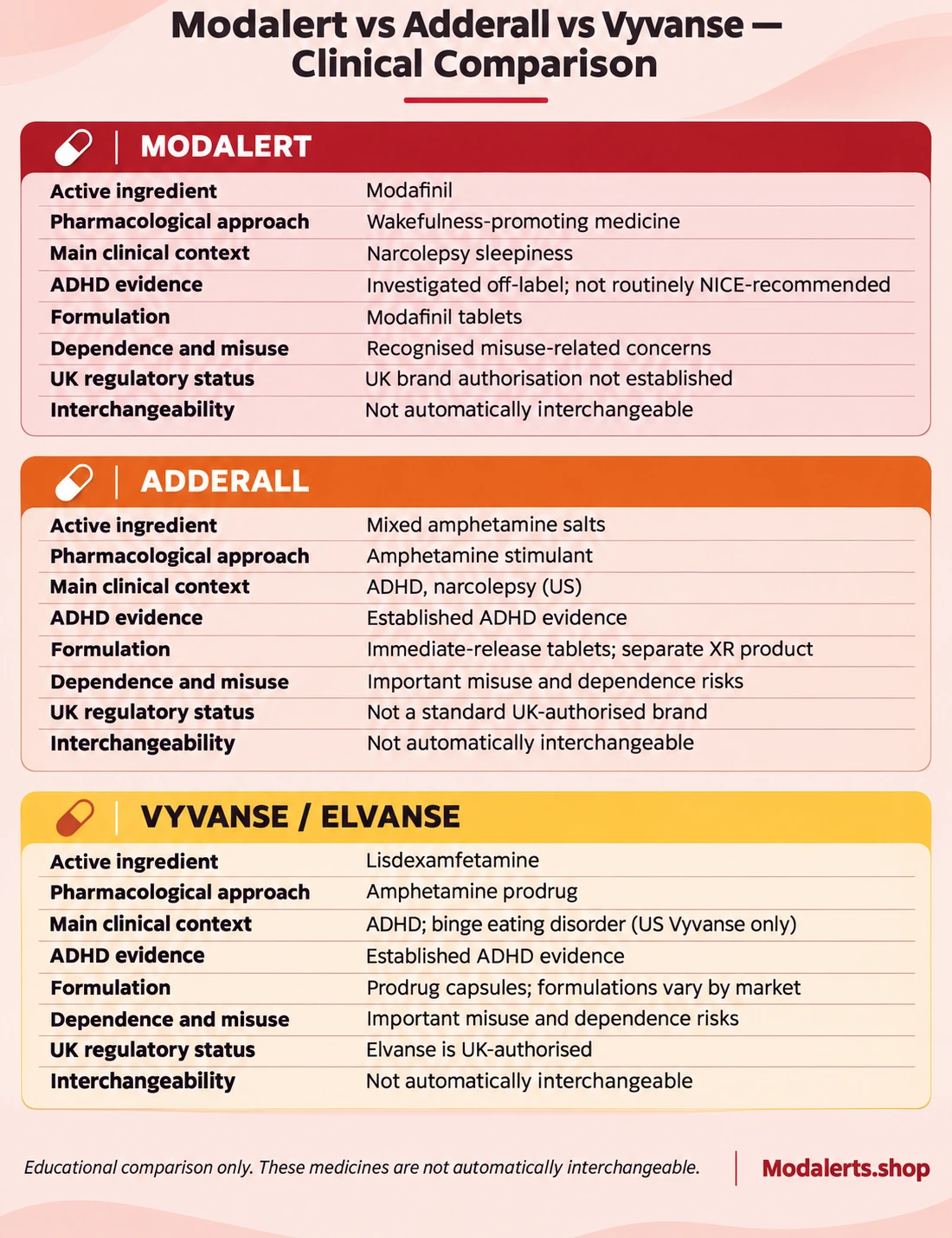
The table summarises important clinical and regulatory distinctions.
It does not rank treatments or establish that one prescription medicine can replace another.
Frequently Asked Questions About Modalert vs Adderall
Is Modalert the Same as Adderall?
No. Modalert contains modafinil, a wakefulness-promoting substance, while Adderall contains mixed amphetamine salts. Both influence central nervous system activity, but their mechanisms and clinical indications differ.
The Modalert vs Adderall comparison also involves distinct UK regulatory considerations. Similarities in alertness-related effects do not make the medicines clinically equivalent or interchangeable, and evidence supporting one ingredient cannot automatically apply to the other.
Is Vyvanse Called Elvanse in the UK?
Yes. Vyvanse and Elvanse are brand names associated with lisdexamfetamine, although their product authorisations operate under different national regulatory systems.
In the UK, Elvanse has authorised indications relating to ADHD. American Vyvanse prescribing information also includes an adult binge eating disorder indication. However, this additional indication should not be interpreted as an equivalent UK authorisation for Elvanse.
Does Modafinil Treat ADHD?
Researchers have investigated modafinil in ADHD populations, but it is not a routinely recommended ADHD medicine under NICE guideline NG87.
Its authorised UK therapeutic indication concerns excessive sleepiness associated with narcolepsy. Although modafinil influences neurotransmitter pathways involved in arousal and attention, this does not establish comprehensive ADHD symptom control. Research findings concerning off-label applications should remain separate from recognised UK prescribing indications.
Are Adderall and Vyvanse Interchangeable?
No. Adderall contains mixed amphetamine salts, while Vyvanse contains lisdexamfetamine, which the body converts into dexamfetamine.
Their formulations, pharmacokinetic characteristics, clinical research and regulatory positions differ. Both have recognised roles in American ADHD treatment, but they are not automatically substitutable. In the UK, lisdexamfetamine is available through authorised products such as Elvanse, whereas Adderall does not hold an equivalent standard branded position.
Which Medicines Are Recommended for Adult ADHD in the UK?
NICE guideline NG87 identifies lisdexamfetamine or methylphenidate as first-line pharmacological options for adults with ADHD when medication is appropriate.
The guidance also includes atomoxetine in specified circumstances, while dexamfetamine has a more restricted role. Modafinil is not a routine NICE-recommended ADHD treatment. These recommendations describe established clinical pathways rather than determining which medicine is appropriate for any particular individual.
References and Further Reading
- National Institute for Health and Care Excellence (NICE). Attention deficit hyperactivity disorder: diagnosis and management (NG87). UK recommendations concerning ADHD assessment and medication. NICE NG87 recommendations.
- Medicines and Healthcare products Regulatory Agency (MHRA). Modafinil (Provigil): now restricted to narcolepsy. Drug Safety Update, March 2011. UK regulatory information following the European safety review. MHRA modafinil guidance.
- Electronic Medicines Compendium (emc). Elvanse 30 mg Hard Capsules Summary of Product Characteristics. UK product-specific indications, pharmacology and safety information. Elvanse prescribing information.
- DailyMed. Adderall Prescribing Information. Immediate-release mixed amphetamine salts, authorised American indications and safety information. Adderall prescribing information.
- DailyMed. Vyvanse Prescribing Information. Lisdexamfetamine pharmacology, indications and safety information. Vyvanse prescribing information.
- UK Government. The Misuse of Drugs Regulations 2001, Schedule 2. Legislative provisions applying to specified controlled substances. UK controlled-drug legislation.
- US Modafinil in Narcolepsy Multicenter Study Group. Randomized trial of modafinil as a treatment for the excessive daytime somnolence of narcolepsy. Neurology. 2000;54(5):1166–1175. Clinical trial on PubMed.
- Volkow ND, Fowler JS, Logan J, et al. Effects of modafinil on dopamine and dopamine transporters in the male human brain: clinical implications. JAMA. 2009;301(11):1148–1154. doi:10.1001/jama.2009.351. Study on PubMed.
PubMed+1
- Kredlow MA, Keshishian A, Oppenheimer S, Otto MW. The efficacy of modafinil as a cognitive enhancer: a systematic review and meta-analysis. Journal of Clinical Psychopharmacology. 2019;39(5):455–461. doi:10.1097/JCP.0000000000001085. Systematic review on PubMed.
Final Thoughts: Modalert vs Waklert
Comparing these three medicines illustrates why substances associated with alertness or attention cannot be assessed solely through perceived strength or duration.
Modafinil has an established UK clinical role in managing narcolepsy-associated excessive sleepiness.
Mixed amphetamine salts have recognised American indications, while lisdexamfetamine holds a defined place in UK ADHD treatment through authorised products such as Elvanse.
Their pharmacological mechanisms, research findings, safety profiles and regulatory classifications remain distinct.
Furthermore, evidence of improved wakefulness should not be confused with evidence of comprehensive ADHD symptom management or broad cognitive enhancement.
Understanding these differences provides a stronger foundation for interpreting scientific research and prescription medicine information.