

Educational and Medical Disclaimer
This Modalert vs Waklert comparison provides general educational information about modafinil, armodafinil and published scientific research. It does not offer medical advice, recommend treatment, establish clinical interchangeability or confirm UK marketing authorisation for either brand.
The article distinguishes active-ingredient research from brand-specific clinical and regulatory claims. Modafinil is a Prescription-Only Medicine in the UK, and current product information and regulatory status should be checked against official sources. Decisions concerning prescription medicines require assessment by an appropriately qualified healthcare professional.
Modalert vs Waklert is a comparison between two related wakefulness-promoting medicines that contain different active pharmaceutical ingredients. Modalert contains modafinil, while Waklert contains armodafinil, a closely related compound with a distinct chemical composition.
Although researchers have investigated both ingredients for excessive sleepiness, their pharmacokinetic profiles differ. These differences affect how the body processes and eliminates each compound.
However, different blood concentrations do not automatically mean that one medicine produces stronger, longer-lasting or more reliable clinical effects.
Understanding this distinction requires examining the underlying chemistry, clinical research, duration-related findings and UK regulatory position.
To understand the clinical evidence behind modafinil, including its approved uses, safety profile and UK legal status, explore our Modalert educational guide.
Modalert vs Waklert: What Is the Main Difference?
The main difference between Modalert and Waklert concerns their active ingredients.
Modalert contains modafinil, a compound made up of two molecular forms called enantiomers. Waklert contains armodafinil, which consists of only one of those forms.
Both ingredients promote wakefulness, but their chemical compositions are not identical.
This distinction matters because the two enantiomers of modafinil leave the body at different rates.
Consequently, armodafinil produces a different concentration-time profile from racemic modafinil, particularly during later periods after administration.
These differences have scientific importance. Nevertheless, they do not establish that Waklert is clinically superior to Modalert.
In a Modalert vs Waklert comparison, the distinction between active ingredients is more significant than the difference between two brands containing the same compound.
The latter comparison is explored in Modalert vs Modvigil: Key Differences Explained.
Modafinil vs Armodafinil: Understanding the Active Ingredients
What Is Modafinil?
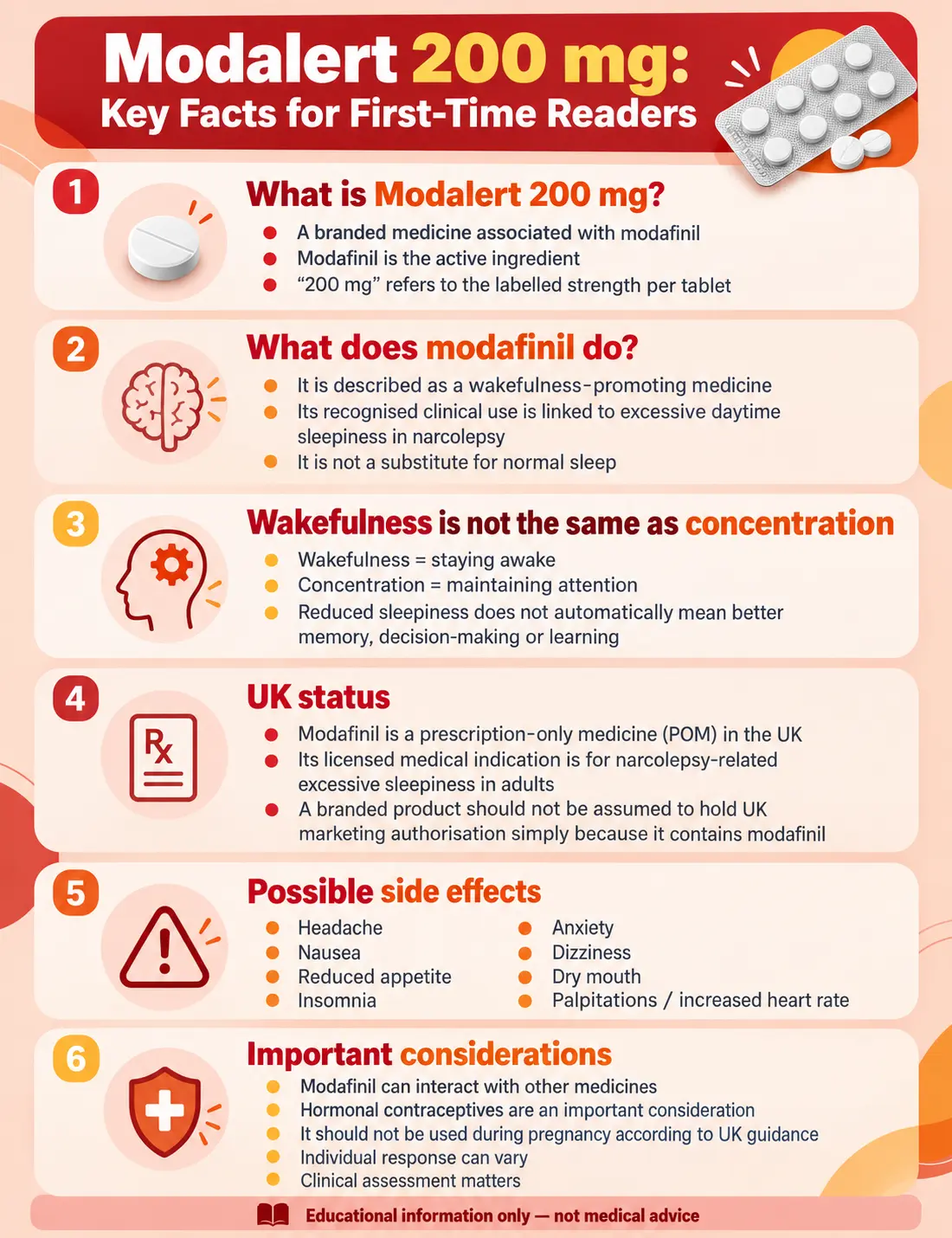
Modafinil is a centrally acting wakefulness-promoting compound used in selected conditions involving excessive sleepiness.
Researchers have not completely established its mechanism of action. However, evidence suggests that dopamine transporter inhibition and changes in neurotransmitter signalling contribute to its effects.
Chemically, modafinil is a racemic mixture containing approximately equal quantities of two enantiomers:
- R-modafinil
- S-modafinil
These molecular forms have the same chemical formula but different three-dimensional structures.
Although both contribute to the pharmacological profile of modafinil, they leave the body at different rates.
What Is Armodafinil?
Armodafinil is the isolated R-enantiomer of modafinil, also known as R-modafinil.
Unlike racemic modafinil, armodafinil does not contain the S-enantiomer.
This difference affects its pharmacokinetic profile because the body eliminates the S-form more quickly than the R-form.
Researchers have studied armodafinil in people with narcolepsy and other defined sleep disorders.
However, evidence about armodafinil as an active ingredient does not automatically establish the clinical performance or regulatory approval of every commercial armodafinil brand.
Why Do Enantiomers Matter?
Enantiomers are molecules that contain the same chemical components but differ in their spatial arrangement.
A familiar comparison involves left and right hands. They have similar structures but are mirror images that cannot perfectly overlap.
In pharmaceutical science, these structural differences can affect how the body processes a compound.
For modafinil, elimination is particularly relevant.
The S-enantiomer leaves the body more rapidly, while the R-enantiomer remains measurable for longer.
As a result, the balance between the two forms changes over time.
This helps explain why modafinil and armodafinil can produce different blood concentration profiles despite their close chemical relationship.
Modalert vs Waklert: Pharmacokinetic Differences
Pharmacokinetics describes how the body absorbs, distributes, metabolises and eliminates medicines.
Several measurements help researchers compare modafinil and armodafinil.
Absorption describes how a substance enters the bloodstream.
Peak plasma concentration (Cmax) identifies its highest measured concentration in blood plasma.
Systemic exposure, commonly expressed through the area under the concentration-time curve (AUC), measures overall exposure during a defined period.
Clearance describes the body’s ability to eliminate a substance.
Together, these measurements help explain differences in how concentrations change over time.
However, they do not directly measure clinical effectiveness.
What Does Elimination Half-Life Mean?
Elimination half-life describes the time required for a substance’s concentration to decrease by approximately half during its elimination phase.
Importantly, half-life does not indicate exactly how long someone experiences a noticeable clinical effect.
A compound may remain measurable in blood even after its wakefulness-promoting effects have declined.
Published pharmacokinetic research has reported terminal elimination half-lives of approximately 13 hours for both armodafinil and racemic modafinil under certain study conditions.
Other studies have reported somewhat different figures.
Therefore, elimination half-life provides information about drug clearance rather than a guaranteed duration of wakefulness.
Does Armodafinil Remain in the Body Differently?
Yes, although the explanation involves more than total elimination time.
The S-enantiomer of modafinil has a shorter elimination half-life, generally around four to five hours in published research.
In contrast, the R-enantiomer leaves the body more slowly.
Consequently, plasma concentrations of racemic modafinil can initially decline more rapidly as the S-component disappears.
Armodafinil, containing only the R-enantiomer, follows a different concentration-time pattern.
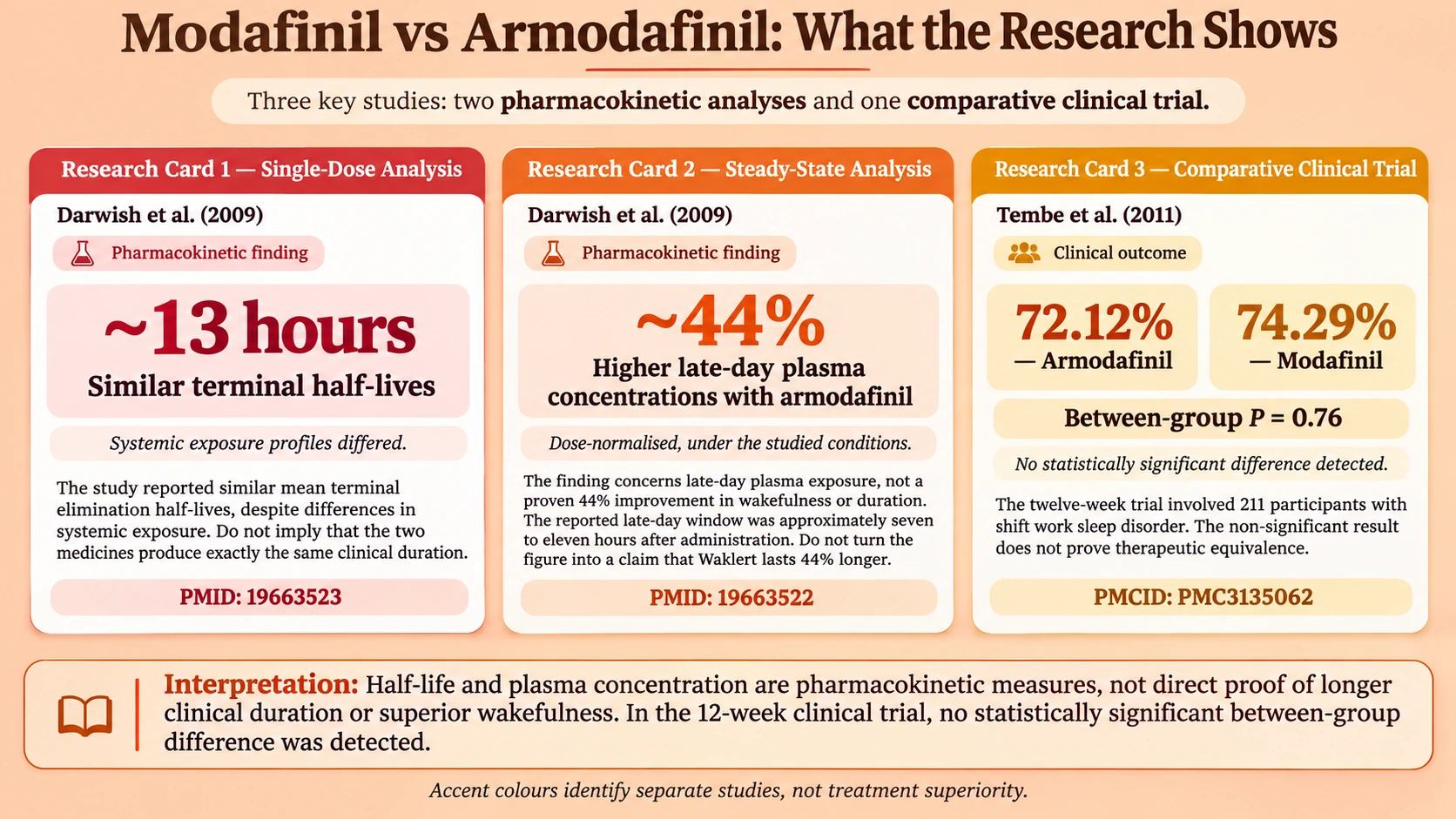
In a pooled analysis of three single-dose pharmacokinetic studies, Darwish and colleagues reported similar mean terminal half-lives of approximately 13 hours for armodafinil and modafinil.
However, after adjusting comparisons to equal milligram quantities, the researchers reported approximately 33% greater exposure to armodafinil through the last measurable concentration and 40% greater exposure when extrapolating total AUC.
These findings demonstrate that similar terminal half-lives can coexist with different systemic exposure profiles.
They do not, by themselves, establish longer clinical wakefulness or greater therapeutic effectiveness.
Does Waklert Last Longer Than Modalert?
The Modalert vs Waklert duration question concerns whether armodafinil produces more sustained wakefulness than racemic modafinil.
Pharmacokinetic evidence offers part of the explanation, but clinical duration requires separate evaluation.
Research published in Clinical Drug Investigation examined steady-state plasma concentrations using two studies involving healthy male volunteers.
The analysis included 34 participants receiving armodafinil and 18 receiving modafinil.
On the seventh day, researchers observed higher dose-normalised late-day plasma concentrations with armodafinil.
Between approximately seven and eleven hours after administration, average concentrations and partial AUC measurements were about 44% higher with armodafinil under the studied conditions.
This finding supports a difference in late-day systemic exposure.
However, the analysis measured drug concentrations rather than how long participants remained clinically awake.
Additionally, the researchers drew on separate study datasets involving relatively small groups of healthy volunteers.
Therefore, the findings cannot establish that Waklert always provides longer wakefulness than Modalert.
Perceived duration, measured clinical wakefulness and blood concentration remain distinct concepts.
Modalert vs Waklert: What Does Clinical Research Show?
Direct comparisons provide useful evidence because separate studies may involve different populations and measurement methods.
Two investigations are particularly relevant to understanding modafinil versus armodafinil research.
The 2011 Tembe Comparative Trial
In 2011, Tembe and colleagues published a randomised, double-blind, multicentre trial involving 211 patients with shift work sleep disorder.
The researchers compared armodafinil and modafinil over a twelve-week treatment period.
They assessed sleepiness ratings, treatment response and adverse events.
Both groups demonstrated statistically significant improvements in sleepiness scores compared with their baseline measurements.
The reported responder rates were:
- Armodafinil: 72.12%
- Modafinil: 74.29%
- Between-group P value: 0.76
The researchers did not identify a statistically significant difference between the groups in this response measure.
However, a non-significant result does not prove that two medicines are therapeutically equivalent.
The study also could not resolve every possible difference in long-term effectiveness, duration or uncommon adverse reactions.
Importantly, shift work sleep disorder is not a UK-licensed indication for modafinil. These results provide comparative scientific evidence rather than an extension of UK-authorised uses.
The Darwish Pharmacokinetic Crossover Study
In 2010, Darwish and colleagues published a randomised, open-label crossover study involving 42 patients with residual excessive sleepiness associated with treated obstructive sleep apnoea.
The researchers examined plasma exposure following modafinil and armodafinil administration.
At the equal milligram quantities investigated, armodafinil produced greater systemic exposure.
After single administration, the reported AUC ratio for armodafinil relative to modafinil was approximately 1.64.
The study also reported that the compounds did not meet its pharmacokinetic bioequivalence criteria.
However, the primary findings concerned blood concentrations rather than direct measurements of comparative clinical wakefulness.
Moreover, the small sample and specific patient population limit broader conclusions.
The AUC ratio must not be interpreted as a clinical potency ratio or evidence that armodafinil produces proportionally stronger wakefulness effects.
For Modalert vs Waklert, these studies highlight why differences in systemic exposure should not be treated as proof of superior clinical outcomes.

Modalert vs Waklert: Strengths and Scientific Comparisons
Product comparisons often mention Modalert 200 mg vs Waklert 150 mg.
These figures identify the declared amounts of different active ingredients. They do not establish a clinically interchangeable relationship.
Modalert contains racemic modafinil, while Waklert contains the isolated R-enantiomer.
Consequently, comparing milligram quantities alone cannot determine relative clinical potency.
Furthermore, a higher AUC indicates greater systemic exposure under the measured conditions, not a matching increase in therapeutic benefit.
The Tembe study compared these commonly discussed strengths in a defined patient population. However, its results do not establish a universal conversion relationship between the compounds or brands.
For additional background on Modalert strength terminology, see Modalert 200 mg: What First-Time Users Should Know.
Modalert vs Modvigil: Onset and Duration
Modafinil’s general pharmacokinetic characteristics appear in authorised UK product information.
For example, a UK Summary of Product Characteristics describes modafinil absorption, peak plasma concentrations and elimination characteristics.
These measurements help researchers understand how the active ingredient behaves in the body.
However, pharmacokinetic information from one authorised formulation should not automatically be treated as independently verified data for every other medicine containing modafinil.
Claims that Modalert starts working faster, Modvigil lasts longer or either brand produces more consistent effects would require credible comparative evidence.
Furthermore, pharmacokinetic measurements do not translate directly into identical subjective experiences for everyone.
For example, a reported difference in perceived duration may reflect individual circumstances rather than a measurable difference between formulations.
Similarly, subjective impressions cannot independently establish differences in bioavailability or pharmaceutical quality.
Without suitable brand-specific research, neither medicine has a scientifically established comparative advantage in onset or duration.
Modalert vs Waklert: Side Effects and Tolerability
Modafinil and armodafinil have overlapping adverse-effect profiles because of their closely related pharmacology.
Commonly reported effects include headache, nausea, dizziness, insomnia and gastrointestinal symptoms.
Both ingredients also carry important safety considerations, including serious skin reactions, psychiatric symptoms and cardiovascular effects.
Additionally, pregnancy-related risks and medicine interactions require careful consideration. UK modafinil product information includes specific warnings about pregnancy and reduced effectiveness of hormonal contraception.
The Tembe comparative trial reported similar overall adverse-event rates between groups.
However, one trial cannot reliably exclude rare reactions or establish identical long-term safety.
Therefore, current comparative evidence does not demonstrate that Waklert is generally safer than Modalert, or vice versa.
For broader information about reported reactions to modafinil, see Modalert Side Effects: What to Know About Safety & Risks.
Modalert vs Waklert: UK Regulatory Context
In the United Kingdom, modafinil is classified as a Prescription-Only Medicine (POM).
The licensed indication for UK-authorised modafinil products concerns excessive sleepiness associated with narcolepsy in adults, with or without cataplexy.
Following European regulatory review, indications involving shift work sleep disorder and obstructive sleep apnoea were removed from UK modafinil authorisations.
The MHRA explains this restriction in its guidance concerning UK-authorised modafinil products.
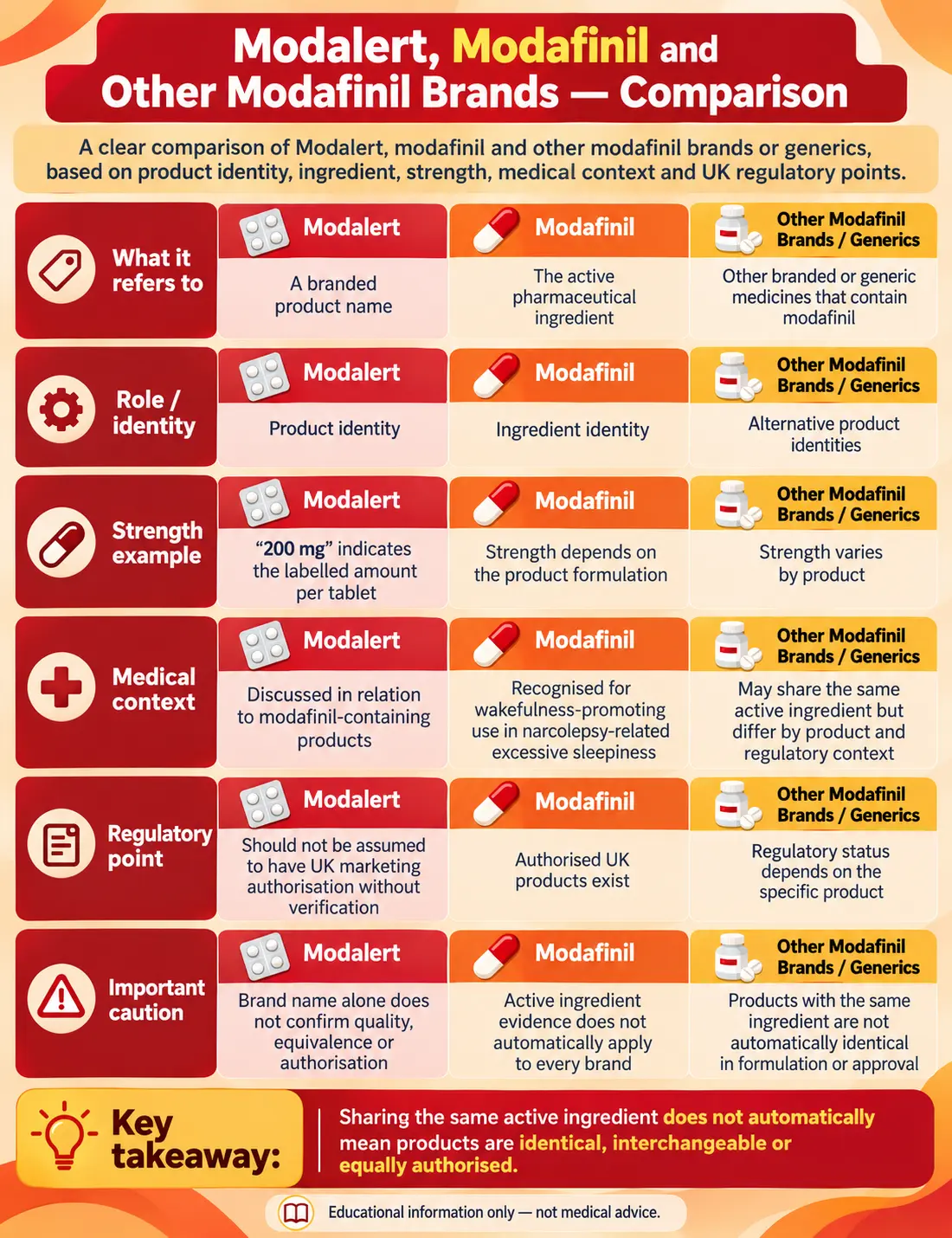
However, authorisation of an active ingredient does not automatically establish authorisation of every branded medicine containing it.
Therefore, the existence of UK-authorised modafinil products does not independently confirm that Modalert holds a UK marketing authorisation.
Likewise, armodafinil and the Waklert brand require separate regulatory consideration.
International authorisation of armodafinil does not establish UK approval.
Any claim of UK authorisation must correspond to a current, identifiable product-specific marketing authorisation.
For wider regulatory background, see Is Modalert Legal in the UK? Prescription Rules & Regulations Explained.
How to Interpret Modalert and Waklert Product Claims
Modalert vs Waklert product claims sometimes portray armodafinil as consistently stronger or longer-lasting than modafinil.
However, such claims may extend beyond the available clinical evidence.
A scientifically grounded comparison distinguishes active-ingredient composition, pharmacokinetic findings, clinical outcomes and product-specific regulatory status.
For example, higher late-day plasma concentrations support a difference in systemic exposure. They do not independently prove longer wakefulness or better cognitive performance.
Similarly, customer experiences cannot replace controlled clinical research.
Price, popularity and informal product ratings also provide no reliable evidence of superior therapeutic effectiveness.
For UK readers, authorised product information and appropriately interpreted clinical research provide a stronger foundation for evaluating medicine-related claims.
Modalert vs Waklert: Scientific Comparison Summary
|
Comparison factor |
Modalert |
Waklert |
|
Active ingredient |
Modafinil |
Armodafinil |
|
Chemical composition |
R- and S-enantiomers |
R-enantiomer only |
|
Commonly discussed strength |
200 mg |
150 mg |
|
Pharmacokinetic differences |
Racemic mixture |
Isolated R-enantiomer |
|
Elimination profile |
Different enantiomer clearance rates |
Distinct systemic exposure profile |
|
Clinical wakefulness |
Modafinil-level evidence |
Armodafinil-level evidence |
|
Duration evidence |
No universal superiority established |
No universal superiority established |
|
Safety considerations |
Modafinil evidence and warnings |
Armodafinil evidence and warnings |
|
UK regulatory status |
Brand-specific verification required |
Brand-specific verification required |
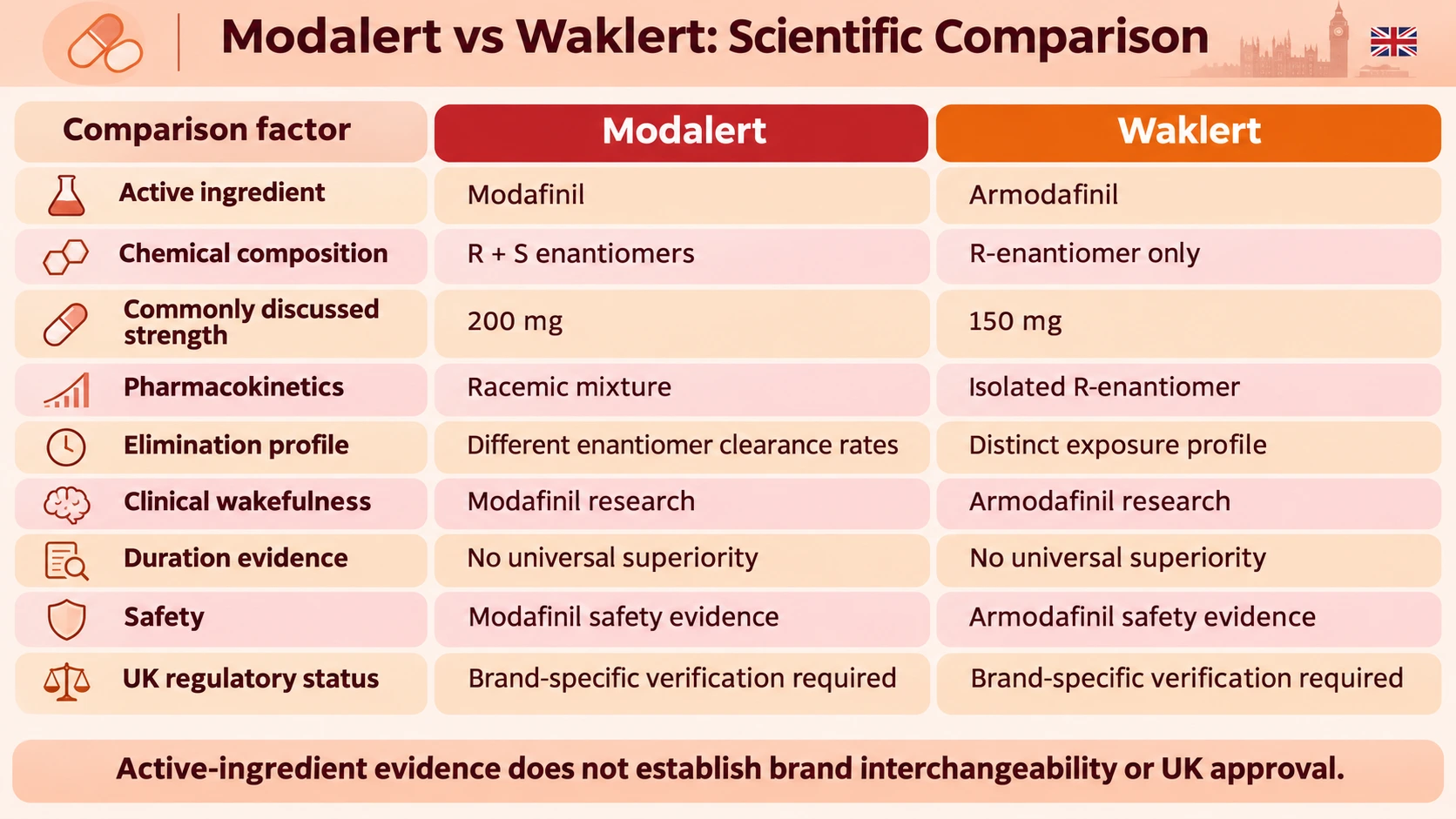

This table summarises active-ingredient evidence and commonly discussed product labels. It does not establish clinical interchangeability, brand-specific effectiveness or UK marketing authorisation.
Key Takeaways: Modalert vs Waklert
The central scientific difference between these products lies in their active ingredients.
Modalert contains racemic modafinil, consisting of R- and S-enantiomers. In contrast, Waklert contains armodafinil, the isolated R-enantiomer.
Because the body eliminates these molecular forms at different rates, their plasma concentration profiles differ.
Research demonstrates greater late-day systemic exposure with armodafinil in certain study conditions.
However, this finding does not establish universally longer clinical wakefulness or superior effectiveness.
Direct comparative evidence remains limited, and researchers must interpret results according to the study population and measured outcomes.
Ultimately, a reliable comparison separates chemical composition, pharmacokinetic behaviour, clinical evidence and UK regulatory authorisation.
Frequently Asked Questions About Modalert vs Waklert
Is Waklert the Same as Modalert?
No. Modalert contains modafinil, a racemic mixture of R- and S-enantiomers, while Waklert contains armodafinil, the isolated R-enantiomer. Although the ingredients have closely related wakefulness-promoting properties, their chemical compositions and pharmacokinetic profiles differ. Consequently, researchers do not regard them as chemically identical, and their relationship does not automatically establish clinical interchangeability.
Does Waklert Last Longer Than Modalert?
Some pharmacokinetic studies report higher late-day plasma concentrations with armodafinil than with racemic modafinil. However, blood concentration does not directly measure the duration of clinical wakefulness. Available evidence does not establish that Waklert consistently produces longer effects than Modalert across individuals. Study design, patient characteristics and the chosen clinical measurements all influence how researchers interpret duration.
Is Armodafinil Stronger Than Modafinil?
Armodafinil is not simply a stronger version of modafinil. It contains only the R-enantiomer, whereas modafinil contains both R- and S-enantiomers. Some studies report greater systemic exposure with armodafinil at equal milligram quantities. Nevertheless, these pharmacokinetic differences do not establish a universal clinical potency ratio or demonstrate consistently greater effectiveness in every patient population.
Do Modalert and Waklert Have the Same Side Effects?
Modafinil and armodafinil have overlapping adverse-effect profiles, including headache, nausea, insomnia and dizziness. Both active ingredients are also associated with important safety warnings. Although comparative trials have reported similar overall adverse-event rates, available evidence does not establish identical safety profiles. Rare reactions, individual variation and differences between study populations limit broader conclusions about relative tolerability.
Are Modalert and Waklert Approved in the UK?
The UK authorises certain modafinil-containing prescription medicines for excessive sleepiness associated with narcolepsy in adults. However, this does not automatically establish UK marketing authorisation for Modalert. Waklert requires separate assessment because international armodafinil authorisations do not establish UK approval. Product-specific authorisation claims require confirmation through current MHRA records rather than assumptions based on the active ingredients.
References and Further Reading
- Medicines and Healthcare products Regulatory Agency (MHRA). Modafinil (Provigil): Now Restricted to Narcolepsy. Drug Safety Update, 11 December 2014; original article March 2011.
Official UK regulatory information concerning the restriction of modafinil’s licensed indication to narcolepsy.
- Darwish M, Kirby M, Hellriegel ET, Robertson P Jr. (2009). Armodafinil and Modafinil Have Substantially Different Pharmacokinetic Profiles Despite Having the Same Terminal Half-Lives: Analysis of Data from Three Randomized, Single-Dose, Pharmacokinetic Studies. Clinical Drug Investigation, 29(9), 613–623.
A pooled analysis examining terminal half-lives, systemic exposure and differences in concentration-time profiles.
- Darwish M, Kirby M, Hellriegel ET. (2009). Comparison of Steady-State Plasma Concentrations of Armodafinil and Modafinil Late in the Day Following Morning Administration. Clinical Drug Investigation.
A separate steady-state analysis reporting approximately 44% higher dose-normalised late-day plasma concentrations with armodafinil under the studied conditions.
- Tembe DV, et al. (2011). Armodafinil versus Modafinil in Patients of Excessive Sleepiness Associated with Shift Work Sleep Disorder: A Randomized Double Blind Multicentric Clinical Trial. Neurology Research International, 2011, Article 514351.
DOI: 10.1155/2011/514351.
A twelve-week comparative trial involving 211 participants, examining sleepiness response and tolerability.
- Darwish M, et al. (2010). Pharmacokinetics of Armodafinil and Modafinil After Single and Multiple Doses in Patients with Excessive Sleepiness Associated with Treated Obstructive Sleep Apnea: A Randomized, Open-Label, Crossover Study. Clinical Therapeutics, 32(12), 2074–2087.
DOI: 10.1016/j.clinthera.2010.11.009.
A pharmacokinetic crossover study examining systemic exposure and bioequivalence-related findings.
- Electronic Medicines Compendium (emc). Modafinil 200 mg Tablets: Summary of Product Characteristics.
UK product information covering authorised indications, pharmacology, warnings, interactions and safety considerations.
Final Thoughts: Modalert vs Waklert
The Modalert vs Waklert comparison highlights an important distinction between two closely related wakefulness-promoting medicines. Although both contain compounds from the same chemical family, Modalert contains racemic modafinil, while Waklert contains armodafinil, the isolated R-enantiomer.
Clinical and pharmacokinetic research confirms differences in how these active ingredients behave in the body. In particular, studies have reported higher late-day plasma concentrations with armodafinil under certain conditions. However, greater systemic exposure does not automatically translate into longer-lasting wakefulness, stronger clinical effects or superior effectiveness.
Furthermore, the available comparative evidence does not establish that either medicine is universally more effective or better tolerated. Study populations, research methods and individual responses all influence how findings should be interpreted.
For UK readers, regulatory status is equally important. Modafinil is a Prescription-Only Medicine, and evidence concerning an active ingredient does not automatically establish UK marketing authorisation for Modalert or Waklert as individual brands.
Ultimately, understanding Modalert vs Waklert requires separating chemical composition, pharmacokinetic differences and clinical outcomes from unsupported product claims. Published research provides valuable context, but it does not justify declaring either medicine a universal winner.